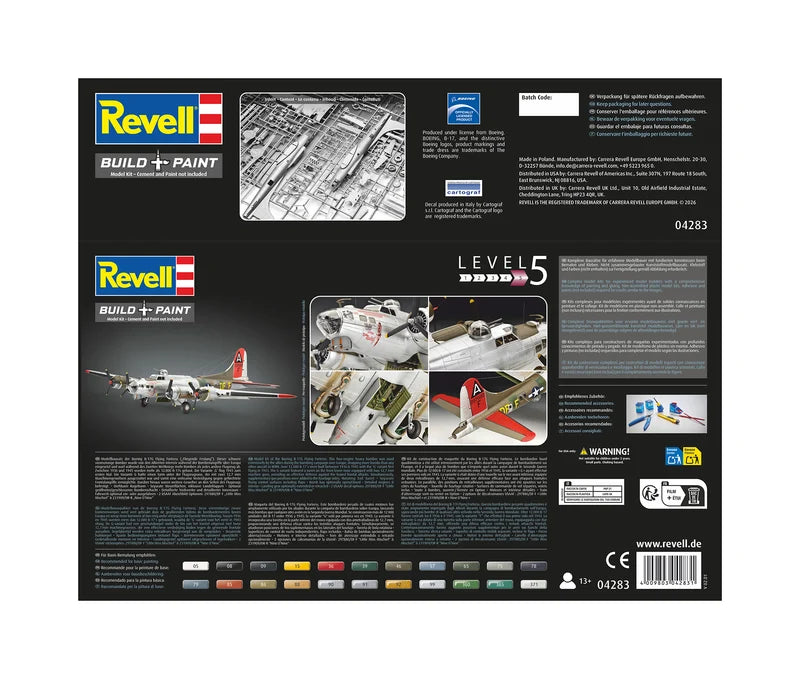


Revell - B-17G Flying Fortress 1:72 Scale
Revell - B-17G Flying Fortress 1:72 Scale
SKU:RMG04283
Regular price
$54.99 USD
Regular price
$74.99 USD
Sale price
$54.99 USD
Unit price
per
Shipping calculated at checkout.
Couldn't load pickup availability
Product features
Product features
Revell B-17G Flying Fortress — 1:72 Scale Model Kit
Recreate one of the most iconic American bombers of World War II with the Revell B-17G Flying Fortress 1:72 Scale Model Kit. This detailed plastic aircraft model represents the final major production version of the legendary Boeing B-17, renowned for its four-engine configuration, long-range bombing capabilities, and extensive defensive armament. Featuring 237 parts, a detailed cockpit with side consoles and an instrument panel, a complete bomb bay with bomb racks, four bombs, a rotating nose turret, a movable ball turret, four detailed radial engines, and optional landing flaps, this kit offers an immersive building experience for experienced modelers and military aviation enthusiasts. With authentic structural details and decals for two United States Army Air Forces aircraft, this model is an excellent addition to any World War II aviation collection.
The Boeing B-17 Flying Fortress: An Icon of World War II
Developed by Boeing in the United States during the 1930s, the B-17 Flying Fortress became one of the most recognizable heavy bombers of World War II. Designed for long-range missions, the aircraft combined a substantial bomb-carrying capacity with multiple defensive machine gun positions and a four-engine configuration.
The Flying Fortress emerged during a period of rapid development in military aviation. As aircraft technology advanced, military planners sought bombers capable of carrying heavier payloads over longer distances while maintaining the performance needed to operate in hostile airspace. Boeing's design addressed these requirements with a robust airframe, powerful radial engines, and a layout that accommodated a large crew.
The B-17 entered combat service during World War II and became a central component of the United States Army Air Forces' strategic bombing campaign in Europe. Operating primarily from bases in Britain, formations of B-17 bombers attacked industrial facilities, transportation networks, airfields, and other military targets.
The aircraft earned its nickname, "Flying Fortress," because of its imposing appearance and extensive defensive armament. Multiple machine gun positions were distributed throughout the fuselage, giving the bomber a distinctive profile and helping protect it against enemy fighters.
Despite its defensive capabilities, the B-17 operated in extremely dangerous conditions. Crews faced enemy interceptors, anti-aircraft fire, severe weather, and the challenges of long missions over occupied Europe. The aircraft's operational history reflects both the engineering achievements of American aviation and the considerable risks faced by bomber crews.
The Revell B-17G Flying Fortress model captures the recognizable appearance of this historic aircraft, offering builders the opportunity to recreate one of the most important heavy bombers of the Second World War.
The B-17G: The Final Major Production Variant
The B-17G represented the final major production version of the Flying Fortress and incorporated improvements developed through the combat experience of earlier variants. One of its most recognizable features was the addition of a powered chin turret beneath the nose, equipped with two machine guns to improve protection against frontal attacks.
Earlier B-17 variants were particularly vulnerable to head-on fighter attacks. The chin turret provided additional defensive firepower in this direction, complementing the aircraft's existing nose, dorsal, ventral, and side-mounted gun positions.
The B-17G retained the characteristic four-engine configuration and long-range capabilities of the Flying Fortress while incorporating refinements to its defensive systems. These changes reflected the experience gained during extensive bombing operations over Europe.
The aircraft's distinctive chin turret, glazed nose, broad wings, and multiple defensive positions distinguish the B-17G from earlier versions. These features make it a particularly interesting subject for scale modeling and military aviation collections.
The Revell kit reproduces these characteristics through a detailed nose turret, multiple gun positions, four radial engines, and a comprehensive fuselage and wing assembly.
Impressive 1:72 Scale Dimensions
Built at a 1:72 scale, the Revell B-17G Flying Fortress offers a detailed representation of the original bomber while remaining suitable for display alongside other military aircraft models.
When completed, the model measures approximately 32.1 cm (12.6 inches) in length, with a wingspan of approximately 44 cm (17.3 inches). Its broad wings and four-engine layout give the completed aircraft a distinctive display presence.
The 1:72 scale is particularly popular among aircraft modelers because it allows collections of historically significant aircraft to be displayed together without requiring excessive space. The B-17G can be paired with American fighters, German interceptors, and other aircraft associated with the European air campaign.
The kit's 237 parts provide opportunities to reproduce important structural and mechanical features, including the cockpit, bomb bay, engine nacelles, defensive turrets, and landing gear.
Its combination of scale, detail, and historical significance makes the Revell B-17G an attractive choice for experienced builders and collectors of World War II aircraft.
Detailed Cockpit and Flight Deck
The cockpit was the operational center of the B-17G, bringing together the flight controls, instruments, and equipment required to operate a large bomber during long-distance missions.
The Revell kit includes a detailed cockpit with side consoles and an instrument panel. Separate seats and interior components help reproduce the working environment of the aircraft's flight crew and add visual depth to the forward fuselage.
These interior details are particularly important because the B-17's glazed nose and cockpit windows make the internal structure visible from several viewing angles. Careful assembly and painting can therefore make a noticeable difference to the finished model.
Builders can use the recommended colors to distinguish the instrument panel, seats, and surrounding components. Additional finishing techniques may be used to emphasize the cockpit's small details and create a more realistic appearance.
The detailed flight deck complements the rest of the aircraft's interior, helping create a convincing representation of a wartime heavy bomber.
Complete Bomb Bay and Four Bombs
The B-17G was designed to carry substantial bomb loads over long distances. Its internal bomb bay allowed the aircraft to transport its payload within the fuselage, helping preserve the streamlined external shape of the bomber.
The Revell kit includes a complete bomb bay with bomb racks and four bombs. These components provide an opportunity to recreate the aircraft's offensive equipment and add technical interest to the construction process.
The bomb bay is an important feature for modelers who enjoy detailed aircraft interiors. Its structural components help illustrate how the aircraft accommodated and released its payload during bombing missions.
The included bombs can be displayed as part of the aircraft's internal bomb load, depending on the assembly configuration. The bomb bay and its associated equipment contribute to a more comprehensive representation of the B-17G's operational role.
Rotating Chin Turret and Defensive Armament
One of the defining features of the B-17G was its powered chin turret, introduced to improve defensive coverage against fighters attacking from the front. The turret carried two machine guns and became a recognizable feature of the aircraft's nose.
The Revell kit includes a rotating chin turret, allowing builders to reproduce this important defensive installation. Its position beneath the nose distinguishes the B-17G from earlier versions of the Flying Fortress and reflects the lessons learned during combat operations.
The kit also includes a detailed upper machine gun turret and a movable ball turret beneath the fuselage. These defensive positions helped provide coverage from different directions and contributed to the bomber's characteristic appearance.
Additional machine gun positions are represented along the fuselage, with optional side-window configurations. The kit also offers two alternative tail machine gun positions, providing flexibility when reproducing the aircraft's defensive layout.
Together, these components highlight the extensive defensive armament associated with the B-17G and make the model particularly appealing to enthusiasts interested in military aircraft engineering.
Detailed Radio and Navigation Compartment
Long-range bombing missions required more than powerful engines and defensive weapons. The B-17G also depended on communication, navigation, and coordination equipment to help its crew operate effectively over long distances.
The Revell model includes a detailed radio and navigation compartment with equipment boxes. These components help reproduce the interior workspaces associated with the aircraft's radio operator and navigator.
The additional interior details create a more complete representation of the bomber and provide opportunities for careful painting and finishing. They also help distinguish the model from simpler kits that focus primarily on the aircraft's exterior.
Combined with the cockpit and bombardier's equipment, the radio and navigation compartment illustrates the complexity of operating a heavy bomber during World War II.
Four Detailed Radial Engines
The Boeing B-17G was powered by four radial piston engines mounted in nacelles beneath its wings. This configuration provided the power needed for long-range bombing missions and became one of the most recognizable characteristics of the Flying Fortress.
The Revell kit includes four detailed radial engines with exhaust rings. These components help reproduce the mechanical features of the original aircraft and add significant detail to the wing assemblies.
The engine cooling rings can be assembled in either an open or closed position, allowing builders to choose between alternative representations of the cooling system. This option adds flexibility to the construction process and gives the modeler greater control over the final appearance.
The kit also includes representations of the turbochargers and separate air intake ducts. These details help reproduce the systems that supported the engines during high-altitude operations.
Together, the engines, exhaust rings, cooling components, and air intakes contribute to the technical character of the completed model. They are especially appealing to aviation enthusiasts who appreciate the engineering behind historic aircraft.
Detailed Wings and Optional Landing Flaps
The B-17G's broad wings were essential to its ability to carry a substantial payload over long distances. They supported the four engine nacelles and contributed to the aircraft's overall aerodynamic performance.
The Revell kit features detailed wing surfaces with engraved panel lines, helping reproduce the appearance of the original metal airframe. These surface details add visual texture and improve the realism of the completed aircraft.
The wings can be assembled with the landing flaps in a lowered position, allowing builders to choose a different display configuration. This option can be particularly effective when presenting the model as an aircraft preparing for landing or positioned on an airfield.
Separate elevator and rudder components add further structural detail to the model. These parts help reproduce the aircraft's control surfaces and provide additional opportunities for precise assembly.
The combination of detailed wings, optional landing flaps, and separate control surfaces helps capture the distinctive proportions of the Flying Fortress.
Detailed Landing Gear and Fuselage Structure
The landing gear supported the B-17G during taxiing, takeoff, and landing. Its robust construction reflected the demands placed on a large bomber operating with a substantial fuel supply, crew, and bomb load.
The Revell kit includes detailed landing gear that helps reproduce the aircraft's undercarriage. Careful assembly contributes to the correct stance of the completed model and enhances its appearance when displayed on a flat surface.
The fuselage features engraved panel lines and detailed exterior surfaces that help recreate the construction of the original aircraft. These details are especially noticeable around the wings, engine nacelles, and main body.
The kit also includes a separate tail fin, allowing this section to be assembled as an individual component. This construction approach contributes to the overall detail of the model and supports careful alignment during assembly.
Together, the fuselage, landing gear, tail assembly, and wing structures provide the foundation for an accurate representation of the B-17G.
Transparent Components and Display Options
The extensive glazing of the B-17G was an important feature of its design, providing visibility for the pilots and crew members working in the nose and other compartments.
The Revell kit includes optional transparent components for the forward section, cockpit, and central upper machine gun position. These parts help reproduce the aircraft's glazed surfaces and make it possible to display important interior areas.
The kit's alternative assembly options allow modelers to select certain configurations for the defensive positions and landing flaps. This flexibility makes the building process more engaging for experienced enthusiasts who enjoy tailoring their models to a preferred presentation.
Careful fitting of the transparent parts is especially important because clear components can reveal gaps or adhesive marks if they are not handled correctly. Taking time during assembly helps maintain a clean, realistic appearance.
Authentic USAAF Markings for Two Aircraft
Historical markings are an essential part of military aircraft modeling. They identify individual aircraft and connect the completed replica with the operational history of the original bomber.
The Revell B-17G Flying Fortress kit includes decals for two United States Army Air Forces aircraft: "Little Miss Mischief" and "Nine O Nine." Both are associated with the 91st Bomb Group, which operated B-17 bombers from Bassingbourn, England, during the European air campaign.
"Little Miss Mischief," serial number 42-97880, is associated with the 324th Bomb Squadron. "Nine O Nine," serial number 42-31909, is associated with the 323rd Bomb Squadron. These marking options provide two historically inspired finishes for the completed model.
Applying the decals carefully helps reproduce the identifying markings and insignia associated with the aircraft. Following the instructions for placement and finishing will help achieve a convincing historical appearance.
The alternative markings also make the kit appealing to collectors who enjoy researching individual aircraft and representing different operational histories within the same aircraft family.
An Engaging Project for Experienced Modelers
The Revell B-17G Flying Fortress is a traditional plastic model kit designed for assembly and painting. With 237 parts and a wingspan of approximately 44 cm, it offers an extensive project for modelers who enjoy detailed military aircraft.
Classified as Skill Level 5 in the Revell catalog, the kit is intended for experienced builders who are comfortable working with multiple assemblies, detailed interiors, transparent components, and more demanding finishing techniques.
Construction involves assembling the fuselage, wings, engine nacelles, cockpit, bomb bay, defensive turrets, landing gear, and other components. Careful alignment of the major assemblies is essential for achieving the correct proportions of the completed aircraft.
Painting and decal application provide opportunities to enhance the model's historical accuracy. Following the recommended color scheme and carefully applying the markings can help create a convincing representation of the B-17G during World War II.
The combination of extensive interior detail, multiple defensive positions, four radial engines, and alternative assembly options makes this kit particularly rewarding for experienced aviation modelers.
A Lasting Legacy in Military Aviation
The Boeing B-17 Flying Fortress became one of the defining aircraft of the American air campaign in Europe during World War II. Its range, bomb-carrying capability, and defensive armament made it an important component of the United States Army Air Forces' strategic bombing operations.
The B-17G represented a significant stage in the evolution of the Flying Fortress, incorporating a chin turret and other defensive refinements developed from earlier combat experience.
The aircraft's distinctive profile and extensive operational history have made it an enduring subject of aviation history. Surviving examples are preserved in museums and collections, allowing future generations to learn about the aircraft and the crews who operated it.
Today, the B-17 remains one of the most recognizable American bombers of World War II. Its combination of engineering significance, historical importance, and distinctive design continues to attract aviation historians, military enthusiasts, and scale model collectors.
Building the Revell B-17G Flying Fortress offers a hands-on opportunity to explore this legacy while recreating one of the most important heavy bombers of the twentieth century.
A Remarkable Addition to Your Aircraft Collection
Combining historical significance, detailed construction, and multiple assembly options, the Revell B-17G Flying Fortress 1:72 Scale Model Kit is an excellent choice for experienced aircraft modelers and World War II aviation enthusiasts.
Its detailed cockpit, complete bomb bay, four bombs, rotating chin turret, movable ball turret, upper gun turret, four radial engines, detailed landing gear, and alternative USAAF markings provide an extensive and rewarding building experience.
The 1:72 scale and 44 cm wingspan give the completed aircraft a substantial display presence while allowing it to fit comfortably alongside other aircraft models from the Second World War.
Whether you are expanding a military aircraft collection, exploring the history of strategic bombing, or searching for a challenging construction project, the Revell B-17G Flying Fortress offers a detailed recreation of an iconic aircraft.
Kit Features
• Manufacturer: Revell
• Model: Boeing B-17G Flying Fortress
• Item Number: 04283
• Scale: 1:72
• Number of Parts: 237
• Skill Level: Level 5
• Material: Plastic
• Approximate Length: 32.1 cm (12.6 inches)
• Approximate Wingspan: 44 cm (17.3 inches)
• Detailed surface structure with engraved panel lines
• Detailed cockpit with side consoles and instrument panel
• Separate seats
• Complete bomb bay with bomb racks
• Four bombs included
• Rotating chin turret
• Bomb-aiming equipment and seat in the nose
• Detailed radio and navigation compartment with equipment boxes
• Optional side-window machine gun configurations
• Movable ventral ball turret
• Detailed upper machine gun turret
• Optional transparent components for the nose, cockpit, and central upper gun position
• Two alternative tail machine gun positions
• Separate tail fin
• Optional lowered landing flaps
• Four detailed radial engines with exhaust rings
• Cooling rings that can be assembled open or closed
• Turbocharger representations and separate air intake ducts
• Separate elevator and rudder components
• Detailed landing gear
• Decals for two USAAF aircraft: "Little Miss Mischief" and "Nine O Nine"
• Traditional plastic model kit requiring assembly and painting
Recreate an iconic aircraft of World War II with the Revell B-17G Flying Fortress 1:72 Scale Model Kit. Build a detailed representation of the legendary American heavy bomber and celebrate its engineering, operational history, and enduring place in military aviation.
Please note: This is an unassembled plastic model kit. Plastic model adhesive, paints, brushes, and other modeling tools are generally required and sold separately. Please consult the assembly instructions for recommended colors, decal placement, and construction guidance.